
Coenzyme Q10
SP17040001
Quantity:
- Coenzyme Q10 is relatively high in foods such as organs (heart, liver, kidney), beef, soybean oil, sardines, mackerel and peanuts, and intake of about 1 catty of sardines, 2 catties of beef or 3 catties of peanuts can provide about 30mg respectively Coenzyme Q10. Coenzyme Q10 was discovered in 1957, and the chemical structure was identified by Dr. Karu Fulukas in 1958, and won the Priestly Medal, the highest honor of the American Chemical Society, known as the father of coenzyme Q10 research, when he proposed Coenzyme Q10 Plays an important role in heart function
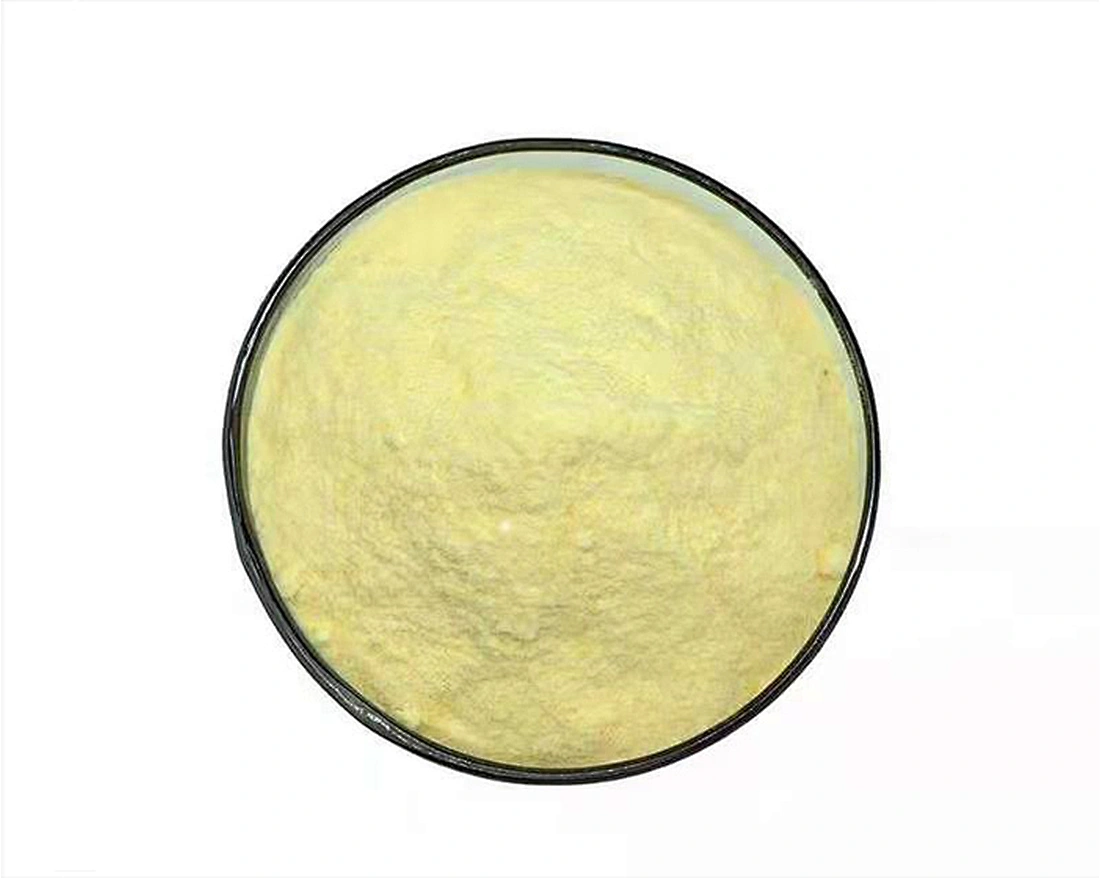
Product Name: Coenzyme Q10 Other Name: Ubidecarenone CAS No: 303-98-0 Grade: USP Grade ANALYSIS SPECIFICATION RESULTS Assay (Anhydrous basis) 98.0%-101.0% USP<621> Decription Yellow-orange crystalline powder Visual Melting Point 48℃-52℃ USP<741> Solubility Soluble in ether;trichlorotethane
and acetone;very slightly soluble indehydrated alcohol;practically insoluble in waterUSP<1171> IR Sample spectrum consistent with the spectrum for USP Reference Standard USP<197K> Color reaction A blue color appears USP<197K> Sieve 100%pass 80 mesh USP<786> 90%pass 100 mesh USP<786> Tapped Density 0.40g/ml~0.60g/ml USP<616>I Water(KF) ≤0.2% USP<921>IC Residue on Ignition ≤0.1% USP<281> Chromatographic Purity Coenzymes Q7,Q8,Q9,Q11 and related impurities ≤1.0% USP<621> Ubidecarenone(2Z)-isomer and related impurities ≤0.5% USP<621> Total impurities Total 1&2≤1.5% USP<621>